
Like Trust.
This article is for B2B founders, sales leaders, and business development teams who rely on outbound to generate pipeline but are frustrated with low reply rates, ignored messages, or brand damage caused by aggressive tactics.
If your outreach feels like it is being tolerated rather than welcomed, this is for you.
What Do We Mean by “Outbound”?
Outbound refers to the proactive process of reaching out to potential clients through channels like LinkedIn, cold email, or direct messaging instead of waiting for inbound leads.
In B2B growth, outbound is often misunderstood as:
- High-volume automation
- Scripted mass messaging
- Immediate pitching
- Calendar links in the first touch
But outbound at its best is strategic relationship initiation. It is targeted.
It is intentional.
And most importantly, it is trust-driven.
Why Most Outbound Feels Like Noise
Noise is not defined by the channel. It is defined by the lack of relevance. When a founder receives five nearly identical messages in a day that all say: “We help companies like yours scale. Can we book 15 minutes?”
It does not matter how sophisticated the automation is. It feels transactional and self-centered.
Noise has three characteristics:
- It prioritizes the sender’s goal over the recipient’s reality.
- It lacks context or personalization.
- It pushes for a meeting before earning attention.
The result is predictable: low response rates and brand fatigue.
Trust Is the Real Objective of Outbound
In B2B markets, especially for high-ticket or complex services, trust precedes conversion.
Decision-makers rarely respond because they are ready to buy. They respond because:
- The message feels relevant.
- The sender demonstrates understanding.
- The interaction feels human.
Trust-based outbound shifts the objective from “book a call” to “start a conversation.”
That shift changes everything.
What Trust-Based Outbound Looks Like
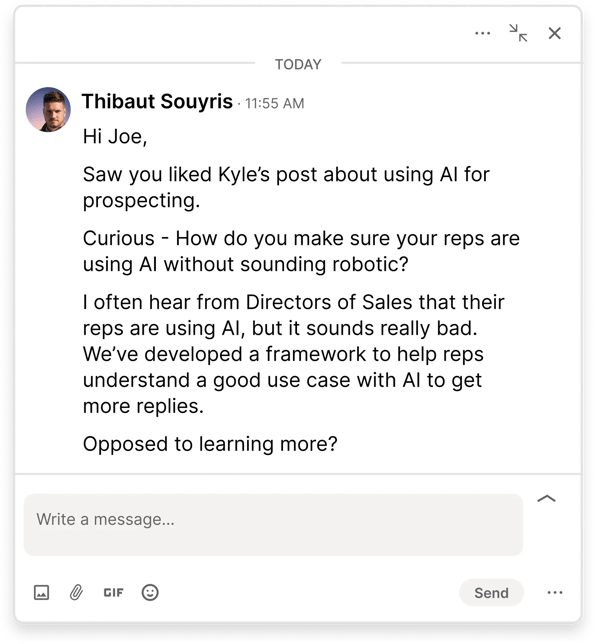


Trust-based outbound begins before the first message is sent.
It starts with clarity around who you serve and why. Instead of targeting everyone who fits a broad industry filter, you narrow your focus to a specific type of company, role, and problem.
A trust-based message often includes:
- A specific observation about their company or role
- A reference to something recent or relevant
- A short, non-sales invitation to connect or exchange insights
It does not include:
- Long feature lists
- Case studies before context
- Immediate meeting requests
- Pressure-based urgency
- Long feature lists
- Case studies before context
- Immediate meeting requests
- Pressure-based urgency
The tone is consultative, not transactional.
The Difference Between Volume-First and Trust-First Outbound
A volume-first strategy measures success by how many messages are sent. A trust-first strategy measures success by the quality of conversations started. Here is how they differ in practice:
Volume-first outbound focuses on scaling automation as quickly as possible. It sacrifices personalization to increase output.
Trust-first outbound focuses on precision. It accepts slightly lower daily output in exchange for higher response rates and stronger long-term positioning.
In the short term, volume feels productive. In the long term, trust compounds.
How to Make Your Outbound Feel Like Trust
- Tighten Your Targeting
Clarity creates relevance. Instead of “SaaS companies,” define:
- Revenue stage
- Team size
- Growth phase
- Likely operational bottlenecks
The clearer your ideal client profile, the more natural your messaging becomes.
2. Lead With Context, Not Credentials
Your prospect cares more about their challenges than your achievements. Instead of:
“We are a leading agency helping clients scale outbound.”
Try:
“I noticed your team is expanding into new markets. Many founders at that stage struggle with consistent outbound conversion.”
The second approach signals awareness before authority.
3. Remove Pressure From the First Interaction
Trust grows when there is no immediate demand. A simple closing such as:
“Would it make sense to exchange notes?”
Feels very different from:
“Here is my calendar link.”
The goal of the first message is not a meeting. It is engagement.
4. Build Dialogue Before Pitching
If someone responds, resist the urge to immediately present your offer. Ask follow-up questions.
Understand their current approach.
Clarify whether there is genuine alignment.
When prospects feel heard, conversations move forward naturally.
Why This Matters for Founders and Sales Teams
Outbound is often the most controllable growth lever in B2B. Inbound takes time. Referrals are unpredictable. Paid ads fluctuate.
But outbound, when structured properly, provides:
- Direct access to decision-makers
- Immediate feedback from the market
- Faster qualification cycles
- More predictable pipeline creation
The problem is not outbound itself. The problem is how it is executed.
At EngageBizDev, the philosophy is simple: outbound should protect and elevate your brand, not damage it. Every message represents your positioning in the market.
When outreach feels thoughtful, it strengthens perception. When it feels automated and aggressive, it erodes it.
Key Takeaways
Outbound is not inherently spammy. Poor execution makes it feel that way. Trust-based outbound prioritizes relevance over volume.
Personalization signals respect.
Conversations convert better than cold pitches.
Long-term pipeline growth depends on a relationship-first strategy.
FAQ
Is outbound still effective in 2026?
Yes. Outbound remains effective when it is targeted and personalized. Generic mass messaging, however, continues to decline in performance. (source needed: updated benchmark data)
How do I know if my outreach feels like noise?
If reply rates are low and responses are short or defensive, your messaging may lack relevance or context.
Should I automate outbound?
Automation can support workflow management, but messaging must remain personalized. Fully automated scripts without context often reduce trust and increase platform risk.
How long should an outbound message be?
Short enough to respect attention. Clear enough to demonstrate relevance. In most cases, under 75 words for the first message works well.
What is the biggest shift teams need to make?
Moving from a meeting-first mindset to a conversation-first mindset.
Is outbound still effective in 2026?
Yes. Outbound remains effective when it is targeted and personalized. Generic mass messaging, however, continues to decline in performance. (source needed: updated benchmark data)
How do I know if my outreach feels like noise?
If reply rates are low and responses are short or defensive, your messaging may lack relevance or context.
Should I automate outbound?
Automation can support workflow management, but messaging must remain personalized. Fully automated scripts without context often reduce trust and increase platform risk.
How long should an outbound message be?
Short enough to respect attention. Clear enough to demonstrate relevance. In most cases, under 75 words for the first message works well.
What is the biggest shift teams need to make?
Moving from a meeting-first mindset to a conversation-first mindset.
Final Perspective
Outbound is not the enemy of trust. Impersonal outreach is.
When done with clarity, context, and respect, outbound does not feel like noise. It feels intentional. It feels relevant. It feels human.
And in B2B, trust is what turns a message into a meeting and a meeting into revenue.