
Guide · 14 min read
B2B Sales Prospecting: 12 Methods That Still Work in 2026
Published November 3, 2026
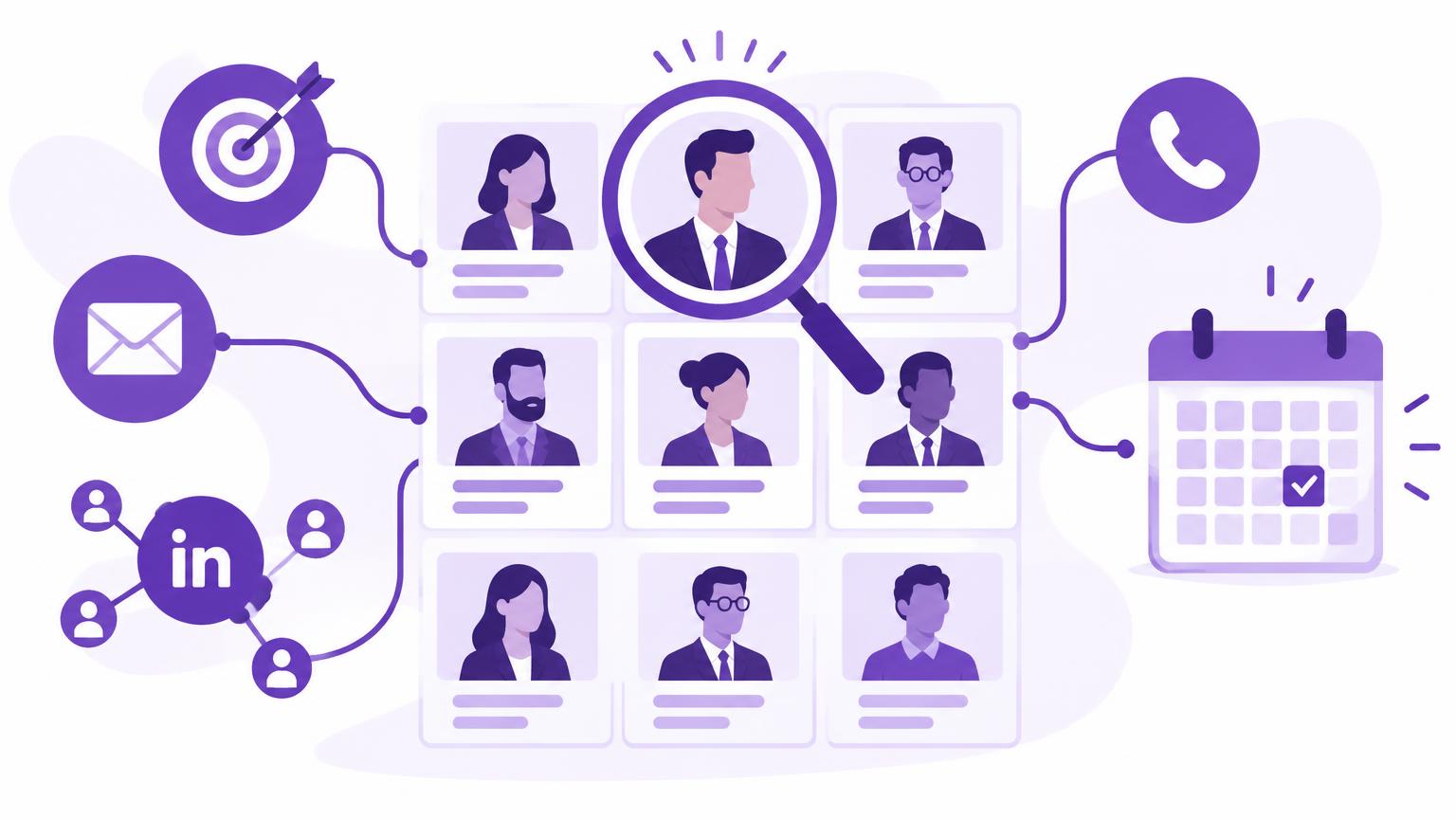
Quick answer: B2B sales prospecting is the process of identifying, researching, and engaging potential business customers who are likely to benefit from your products or services. The most effective B2B prospecting methods include cold email outreach, LinkedIn sales prospecting, cold calling, referral selling, intent-based targeting, and multi-channel outbound sales. Success depends on reaching the right decision-makers with relevant messaging, consistent follow-up, and a clear reason to engage.
This guide is part of our B2B sales prospecting series. B2B prospect list building services: ICP research, contact verification, segmentation and exclusions.
Why prospecting has changed
For B2B companies, startups, and founder-led businesses, effective prospecting is essential for building a predictable pipeline of qualified sales opportunities.
However, the way businesses find and engage prospects has changed.
Buyers have more information, inboxes are increasingly crowded, and generic sales pitches are easier to ignore. Simply purchasing a contact list and sending hundreds of identical messages is no longer a reliable strategy for generating quality sales meetings.
Modern B2B prospecting requires a combination of research, personalization, automation, and strategic outreach.
Whether you manage an internal sales team or partner with a B2B appointment setting agency, understanding which prospecting methods still work can help you improve response quality, increase meeting conversion rates, and accelerate revenue growth.
This guide explores 12 proven B2B sales prospecting methods, explains when to use each approach, and shows how to build a scalable outbound strategy.
What Is B2B Sales Prospecting?
B2B sales prospecting is the systematic process of finding and connecting with businesses that match your ideal customer profile (ICP) and have the potential to become paying customers.
Unlike broad marketing campaigns, prospecting focuses on specific companies, decision-makers, and buying opportunities.
A typical B2B prospecting process includes:
• Identifying target accounts: Finding companies that match your ideal customer profile. • Researching decision-makers: Identifying individuals who influence or approve purchasing decisions. • Qualifying prospects: Evaluating business fit, potential needs, and buying signals. • Initiating outreach: Contacting prospects through email, LinkedIn, phone calls, or other channels. • Following up strategically: Maintaining relevant communication until a meaningful conversation develops. • Booking qualified meetings: Connecting interested prospects with the appropriate sales representative.
For companies investing in outbound lead generation services, effective prospecting is the foundation of a reliable sales pipeline.
The goal is not simply to generate more contacts. It is to create meaningful conversations with businesses that have a legitimate reason to consider your solution.
Why Is B2B Sales Prospecting Still Important in 2026?
B2B sales prospecting remains important because companies cannot rely exclusively on inbound demand to create predictable revenue opportunities.
Inbound marketing can attract interested buyers, but it depends on prospects discovering your business and choosing to engage.
Outbound prospecting allows companies to proactively identify and contact accounts that fit their ideal customer profile, even when those accounts are not actively searching for a solution.
A well-designed prospecting strategy supports several business objectives:
• Sales pipeline acceleration: Create opportunities without waiting for inbound inquiries. • Predictable pipeline development: Establish a repeatable process for reaching qualified accounts. • Market expansion: Enter new industries, geographic markets, and customer segments. • Founder-led company growth: Reduce the amount of time founders spend manually finding prospects. • Sales team augmentation: Give account executives more time to focus on discovery, proposals, and closing. • Revenue diversification: Reduce dependence on a single lead acquisition channel.
For growing organizations, a scalable outbound strategy can provide greater control over which accounts enter the sales pipeline.
What Are the 12 B2B Sales Prospecting Methods That Still Work?
The strongest prospecting programs rarely depend on a single tactic. They combine complementary channels, buying signals, and targeted messaging to improve the chances of reaching qualified decision-makers.
Here is a comparison of 12 practical B2B prospecting methods.
| Prospecting method | Best use case | Primary advantage |
|---|---|---|
| 1. Cold email outreach | Targeted B2B campaigns | Direct, scalable communication |
| 2. LinkedIn prospecting | Professional decision-makers | Context and relationship building |
| 3. Cold calling | High-priority accounts | Real-time conversations |
| 4. Multi-channel outbound | Complex B2B sales | Multiple engagement opportunities |
| 5. Intent-based prospecting | Accounts showing buying signals | Better timing and relevance |
| 6. Referral prospecting | Trust-driven industries | Warm introductions |
| 7. Account-based prospecting | High-value target accounts | Personalized account engagement |
| 8. Trigger-event prospecting | Companies experiencing change | Timely outreach |
| 9. Content-led prospecting | Research-oriented buyers | Credibility and education |
| 10. Email re-engagement | Dormant leads and opportunities | Existing relationship context |
| 11. AI-assisted prospect research | Large prospect databases | Research efficiency |
| 12. Outsourced SDR prospecting | Startups and scaling companies | Dedicated outbound execution |
1. How Does Cold Email Outreach Generate B2B Sales Opportunities?
Cold email outreach remains a practical B2B sales prospecting method because it allows companies to communicate directly with relevant decision-makers.
However, successful cold email campaigns depend on targeting, deliverability, and message relevance rather than sending large volumes of generic emails.
An effective email outreach strategy should include:
• A clearly defined ideal customer profile. • Accurate and appropriately sourced business contact information. • A subject line that reflects the prospect's business context. • A concise message addressing a relevant problem or opportunity. • A credible reason for initiating contact. • A low-friction call to action. • A structured follow-up sequence.
For example, a company providing outsourced sales development services might target B2B SaaS founders who are hiring their first sales representatives.
Rather than sending a generic introduction, the outreach could focus on a relevant challenge: generating qualified sales conversations while building an internal sales function.
Why it works: Email provides a direct communication channel and can support highly segmented campaigns when contact data and messaging are carefully managed.
Best for: B2B SaaS companies, professional services firms, technology providers, and businesses with clearly identifiable target buyers.
A specialized cold email outreach agency can help manage prospect research, messaging, campaign operations, and performance optimization.
Cold email programs should also respect applicable privacy and marketing laws, including CAN-SPAM and GDPR where relevant, and maintain appropriate opt-out processes.
2. How Can LinkedIn Sales Prospecting Help Reach Decision-Makers?
LinkedIn sales prospecting helps B2B companies identify relevant professionals, understand their business responsibilities, and build relationships before requesting meetings.
It is particularly useful when targeting founders, executives, department heads, and other business decision-makers.
An effective LinkedIn prospecting process typically includes:
1. Identify target companies by industry, size, location, and business model.
2. Find relevant stakeholders using job titles, responsibilities, and professional information.
3. Review company announcements, posts, and relevant business activity.
4. Send a personalized connection request when appropriate.
5. Engage with relevant content and establish context.
6. Initiate a concise business conversation.
7. Suggest a meeting when there is a clear reason to continue the discussion.
For example, an IT services provider might identify companies expanding their technology teams and engage with operations or technology leaders about infrastructure challenges.
The objective should be to establish relevance rather than immediately deliver a sales pitch.
Why it works: LinkedIn provides professional context that can make outreach more targeted and credible.
Best for: B2B consulting, SaaS, technology services, recruitment, and executive-level selling.
Working with a LinkedIn lead generation agency can help businesses develop consistent prospecting workflows while keeping outreach personalized and compliant with platform rules.
3. Is Cold Calling Still Effective for B2B Prospecting?
Yes. Cold calling can still be effective in B2B prospecting, particularly when sales representatives contact carefully selected accounts with a relevant business reason.
Unlike email or LinkedIn messages, phone conversations provide immediate feedback and allow sales representatives to explore a prospect's needs in real time.
The effectiveness of cold calling depends heavily on preparation.
A productive B2B cold calling approach includes:
• Researching the prospect's company before dialing. • Identifying the appropriate decision-maker. • Preparing a short, relevant opening statement. • Asking questions instead of delivering a lengthy sales pitch. • Listening for business challenges and qualification signals. • Proposing a reasonable next step when there is mutual interest.
For example, a sales representative contacting a manufacturing company might reference an announced expansion and ask how the business plans to support additional operational demand.
This creates a more relevant conversation than a generic product introduction.
Why it works: Phone conversations allow for immediate interaction, objection handling, and qualification.
Best for: High-value B2B accounts, complex services, and sales cycles requiring direct conversations.
Cold calling should follow applicable telemarketing, privacy, and consent requirements, including relevant restrictions on calling times and automated dialing.
4. Why Is Multi-Channel Outbound Sales More Effective Than a Single Channel?
Multi-channel outbound sales combines several communication methods to reach prospects through different professional touchpoints.
Instead of relying exclusively on email, companies may use a coordinated combination of:
• Cold email. • LinkedIn engagement. • Phone outreach. • Relevant content sharing. • Referral introductions. • Event-based follow-up.
The primary advantage is channel diversification.
Some prospects prefer email, while others are more likely to respond to a phone call or LinkedIn conversation.
A coordinated outreach sequence can increase opportunities for engagement without repeatedly delivering the same message.
Example of a multi-channel B2B prospecting sequence:
| Day | Channel | Prospecting activity |
|---|---|---|
| 1 | Send a personalized introduction | |
| 3 | Engage with relevant professional content | |
| 5 | Phone | Attempt a brief discovery conversation |
| 8 | Share a relevant insight or use case | |
| 12 | Follow up with a contextual message | |
| 16 | Send a concise final follow-up |
Illustrative sequence only. Actual cadence should reflect buyer preferences, applicable rules, and engagement signals.
Why it works: Multi-channel prospecting creates several opportunities for a prospect to engage while reducing dependence on one communication method.
Best for: B2B companies selling complex or high-value solutions.
Businesses seeking done-for-you sales prospecting can use this approach to coordinate email, LinkedIn, and phone outreach within a unified campaign.
5. What Is Intent-Based B2B Prospecting?
Intent-based prospecting identifies companies that may be researching solutions, evaluating vendors, or demonstrating behavior associated with potential purchasing interest.
Rather than contacting every company that matches a broad demographic profile, sales teams prioritize accounts displaying relevant signals.
Common intent signals include:
• Repeated engagement with relevant product or service content. • Visits to high-intent pages on a company's website, where tracking is permitted. • Research activity reported by third-party intent-data providers. • Participation in relevant webinars or industry events. • Requests for comparisons, demonstrations, or pricing information. • Engagement with buying-related educational resources.
For example, a cybersecurity provider might prioritize accounts showing increased interest in compliance, risk management, or security infrastructure topics.
However, intent data should be interpreted carefully.
A company researching a topic is not necessarily ready to purchase, and third-party intent signals may indicate account-level interest rather than the activity of a specific decision-maker.
Why it works: Intent-based targeting helps sales teams prioritize accounts with potentially relevant needs.
Best for: SaaS, enterprise technology, cybersecurity, and companies with longer buying cycles.
6. How Does Referral Prospecting Improve B2B Lead Quality?
Referral prospecting involves identifying potential customers through introductions from existing clients, professional contacts, strategic partners, and industry relationships.
Referrals can be particularly valuable because the prospect may already have some familiarity with or trust in the person making the introduction.
A structured referral strategy includes:
1. Identify satisfied customers and trusted professional relationships.
2. Determine which types of companies would benefit from your solution.
3. Request specific introductions rather than broad referrals.
4. Make it easy for contacts to introduce you.
5. Follow up respectfully with referred prospects.
6. Maintain the relationship regardless of the sales outcome.
For example, a fractional CFO serving technology startups may introduce a trusted outbound sales partner to founders who need help generating new business opportunities.
Why it works: Referrals can establish credibility before the first sales conversation.
Best for: Consulting, professional services, B2B agencies, and relationship-driven industries.
Referral prospecting works especially well alongside outbound campaigns because it creates an additional source of qualified B2B leads.
7. What Is Account-Based Prospecting and When Should You Use It?
Account-based prospecting is a targeted sales approach focused on engaging specific high-value companies rather than pursuing a large volume of unrelated leads.
It is closely related to account-based marketing (ABM), where sales and marketing teams coordinate efforts around selected accounts.
A typical account-based prospecting strategy includes:
• Selecting target companies based on revenue potential and strategic fit. • Mapping decision-makers, influencers, and stakeholders. • Researching account-specific challenges. • Developing messaging for different buyer roles. • Coordinating outreach across multiple channels. • Tracking engagement at both the contact and account levels.
For example, a B2B technology company selling enterprise software may need to engage the CFO, IT director, operations leader, and procurement team before an opportunity progresses.
A single-contact outreach strategy may miss important stakeholders.
Why it works: Account-based prospecting concentrates resources on organizations with greater strategic value and supports multi-stakeholder engagement.
Best for: Enterprise sales, high-ticket services, and businesses targeting a relatively small number of valuable accounts.
8. How Can Trigger Events Create Better Sales Prospecting Opportunities?
Trigger-event prospecting uses recent business developments to identify companies that may have new or changing needs.
These developments create natural reasons to initiate relevant conversations.
Examples of B2B buying triggers include:
• New funding announcements. • Executive leadership changes. • Geographic expansion. • New product launches. • Significant hiring activity. • Mergers and acquisitions. • Technology adoption. • Regulatory or industry changes.
For example, a startup that recently raised funding may be preparing to expand its sales team.
An outbound lead generation services provider could approach the company with a relevant message about building pipeline while its internal sales organization develops.
The strongest trigger-based messages connect the business event to a plausible operational challenge without assuming the prospect has a specific problem.
Why it works: Timely outreach can be more relevant than generic messaging because it reflects an observable change in the prospect's business.
Best for: B2B startups, growth-stage companies, professional services, and technology providers.
9. How Does Content-Led Prospecting Help Build Trust?
Content-led prospecting uses valuable educational materials to initiate or strengthen conversations with potential buyers.
Instead of immediately asking prospects to schedule a meeting, sales teams share relevant insights that help buyers understand a business challenge.
Useful prospecting content includes:
• Industry research. • Practical guides. • Case studies. • ROI calculators. • Benchmarking reports. • Product comparison resources. • Implementation checklists. • Short educational videos.
For example, a demand generation agency might share a guide explaining how B2B SaaS companies can evaluate outbound campaign performance.
The content gives prospects a reason to engage beyond a conventional sales pitch.
Content-led prospecting is particularly effective when the material directly addresses a problem relevant to the recipient's role.
Why it works: Educational content can demonstrate expertise, support buyer research, and create more substantive conversations.
Best for: Complex B2B products, consultative services, and companies targeting buyers with lengthy evaluation processes.
10. How Can Re-Engaging Old Leads Generate New Sales Meetings?
Re-engagement prospecting focuses on reconnecting with leads, previous opportunities, and business contacts who have not converted into customers.
These prospects may already understand your company or have previously expressed interest in your solution.
Potential re-engagement audiences include:
• Prospects who attended a discovery call but did not proceed. • Opportunities that stalled because of timing or budget. • Former customers who may have new needs. • Leads who downloaded content but never scheduled a meeting. • Previous outbound prospects who requested future contact. • Accounts that have experienced relevant business changes.
An effective re-engagement message should reference the previous interaction and provide a clear reason for reconnecting.
For example, a prospect who previously postponed an outbound sales initiative might be worth contacting after a relevant hiring announcement or new market expansion.
Why it works: Existing relationship context can make outreach more relevant and reduce the need to introduce your company from scratch.
Best for: Businesses with established CRM databases, longer sales cycles, and previously qualified opportunities.
Re-engagement campaigns should respect prior opt-outs, consent preferences, and data-retention requirements.
11. How Can AI Improve B2B Sales Prospecting?
AI-assisted prospecting helps sales teams research accounts, organize information, identify potential fit, and develop more relevant outreach at scale.
AI is most valuable when it supports human judgment rather than replacing prospect qualification and relationship building.
Practical applications include:
• Analyzing company information against an ideal customer profile. • Grouping prospects by industry, company size, or use case. • Summarizing publicly available company developments. • Identifying possible outreach angles based on verified information. • Drafting personalized email variations. • Reviewing campaign performance patterns. • Prioritizing accounts for manual research.
For example, an SDR team could use AI to categorize a list of target companies and generate draft messaging based on each company's business model.
A sales representative should then verify the underlying information and review the message before sending it.
AI-generated personalization can damage credibility when it invents business challenges, misinterprets company information, or references inaccurate events.
Why it works: AI can reduce repetitive research and preparation work, allowing sales representatives to spend more time on qualification and conversations.
Best for: Growing outbound teams, B2B sales agencies, and organizations managing large prospect databases.
12. When Should Companies Outsource B2B Sales Prospecting?
Outsourced B2B sales prospecting involves partnering with a specialized provider to manage some or all of the activities required to generate qualified sales conversations.
This approach is often described as sales development as a service.
Instead of recruiting, training, and managing an entire internal prospecting function, companies can work with an SDR outsourcing company to support activities such as:
• Ideal customer profile development. • Target account identification. • Prospect and decision-maker research. • Cold email campaign management. • LinkedIn outreach. • Cold calling. • Multi-channel campaign coordination. • Lead qualification. • Appointment setting. • Prospecting performance reporting.
For startups and growing B2B businesses, outsourced prospecting can provide dedicated execution without requiring the immediate development of a full internal SDR department.
However, outsourcing does not eliminate the need for collaboration.
Successful programs require clear qualification criteria, accurate positioning, feedback from sales calls, and shared accountability for meeting quality.
Why it works: Outsourcing can provide specialized prospecting resources, established workflows, and operational capacity.
Best for: Startups, founder-led companies, lean sales teams, and organizations expanding into new markets.
A B2B appointment setting agency can be particularly useful when account executives need more qualified conversations but lack the time or resources to manage prospecting themselves.
How Do You Build a B2B Sales Prospecting Strategy That Consistently Books Meetings?
A successful B2B prospecting strategy connects targeting, outreach, qualification, and sales handoff into one repeatable process.
The most important steps are:
1. Define your ideal customer profile. Identify target industries, company sizes, revenue ranges, decision-maker roles, and disqualifying characteristics.
2. Build a verified prospect list. Research relevant accounts, validate contact information, and segment prospects by business needs.
3. Select complementary outreach channels. Choose cold email, LinkedIn, phone, and other channels based on how your buyers communicate.
4. Develop relevant messaging. Explain why you are contacting the prospect and connect your offer to a credible business opportunity.
5. Create a follow-up process. Establish reasonable outreach intervals and adapt messaging based on responses.
6. Qualify prospects before booking. Confirm fit, relevant needs, timing, and willingness to have a meaningful conversation.
7. Measure and optimize performance. Review conversion rates, meeting quality, and sales pipeline contribution.
A sales engagement platform or CRM can support this process by organizing prospect information, tracking communication, and helping teams manage follow-up activities.
However, technology should support the prospecting strategy rather than determine it.
How Do You Know Whether a B2B Prospect Is Qualified?
A qualified B2B prospect is not simply someone who responds positively to an email or accepts a meeting invitation.
The prospect should match your target customer profile and have a credible reason to explore your solution.
EngageBizDev uses a six-part meeting qualification framework that evaluates company fit, role fit, problem fit, timing, intent, and context.
| Qualification factor | Key question |
|---|---|
| Company fit | Does the business match our ideal customer profile? |
| Role fit | Can this person influence or approve a purchase? |
| Problem fit | Is there a relevant challenge our solution can address? |
| Timing | Is there a reasonable opportunity for further discussion? |
| Intent | Has the prospect agreed to the purpose of the meeting? |
| Context | Does the sales representative have enough information to prepare? |
This approach helps distinguish genuine sales opportunities from meetings that may never progress.
For companies using a book sales meetings service, establishing qualification criteria before launching campaigns is essential for protecting sales team productivity.
Which B2B Sales Prospecting Metrics Should You Track?
Measuring prospecting performance requires more than counting emails sent or LinkedIn connections made.
The most useful metrics show whether outreach is generating qualified conversations and contributing to revenue opportunities.
| Metric | What it measures | Why it matters |
|---|---|---|
| Positive reply rate | Positive responses ÷ delivered messages | Evaluates targeting and messaging |
| Meeting booking rate | Meetings booked ÷ contacted prospects | Measures appointment generation |
| Meeting show rate | Meetings attended ÷ meetings scheduled | Evaluates meeting attendance |
| Qualification rate | Qualified meetings ÷ meetings held | Measures prospect relevance |
| Opportunity conversion rate | Opportunities created ÷ qualified meetings | Connects prospecting to pipeline |
| Cost per qualified meeting | Prospecting spend ÷ qualified meetings | Evaluates acquisition efficiency |
| Pipeline generated | Value of opportunities sourced through prospecting | Measures potential revenue contribution |
Example: Why Meeting Quality Matters More Than Outreach Volume:
Consider two hypothetical B2B prospecting campaigns.
| Campaign | Approach | Meetings booked | Qualified meetings | Qualification rate |
|---|---|---|---|---|
| Campaign A | High-volume outreach | 20 | 5 | 25% |
| Campaign B | Targeted outreach | 12 | 9 | 75% |
Illustrative scenario, not actual campaign results.
Campaign B books fewer total meetings but produces more qualified conversations.
This illustrates an important principle: B2B prospecting should be optimized for qualified pipeline, not activity volume alone.
Should You Build an Internal SDR Team or Outsource Sales Prospecting?
The right choice depends on your sales maturity, budget, internal resources, and growth objectives.
An internal SDR team may offer greater day-to-day control, while outsourced sales development can provide additional prospecting capacity without immediately hiring a dedicated team.
| Consideration | Internal SDR team | Outsourced SDR partner |
|---|---|---|
| Recruitment | Requires hiring | Provider supplies personnel |
| Training | Managed internally | Supported by provider |
| Prospecting tools | Typically managed internally | May be included |
| Messaging control | Direct internal oversight | Shared approval and oversight |
| Management | Requires internal leadership | Provider manages execution |
| Scalability | Depends on hiring capacity | Depends on partner capacity |
| Best fit | Established sales organizations | Lean or growing B2B teams |
For businesses exploring lead generation for startups, outsourcing can be a practical option once the company has a proven offer and a clearly defined target market.
A fractional sales team or outsourced SDR partner can support prospect research, outreach, qualification, and appointment setting while founders and account executives focus on closing opportunities.
However, companies still validating product-market fit may benefit more from founder-led prospecting before investing in a larger outbound program.
What Are the Most Common B2B Prospecting Mistakes?
Even well-funded sales teams can struggle when their prospecting processes prioritize activity over relevance.
Common mistakes include:
• Targeting too broadly: Contacting companies without a clearly defined ICP. • Using generic messaging: Sending identical pitches to prospects with different responsibilities. • Over-automating outreach: Relying on mass messaging without sufficient quality control. • Ignoring deliverability: Sending emails through poorly configured infrastructure or unverified lists. • Failing to follow up: Ending conversations before prospects have had a reasonable opportunity to respond. • Booking unqualified meetings: Treating every positive response as a sales opportunity. • Measuring the wrong outcomes: Optimizing for message volume instead of qualified pipeline. • Neglecting the sales handoff: Booking meetings without providing account executives with relevant prospect context.
Avoiding these mistakes can improve prospecting efficiency without necessarily increasing outreach volume.
Conclusion: What B2B Sales Prospecting Methods Should You Prioritize?
B2B sales prospecting continues to work when businesses prioritize relevance, timing, and genuine buyer conversations over mass outreach.
Cold email, LinkedIn prospecting, cold calling, referral selling, account-based outreach, and intent-based targeting remain valuable methods when applied strategically.
The most successful approach is not necessarily the one that reaches the greatest number of prospects. It is the one that consistently identifies the right companies, engages the right decision-makers, and converts relevant interest into qualified sales opportunities.
For businesses looking to accelerate growth, combining targeted prospecting with structured qualification and multi-channel outreach can create a more predictable sales pipeline.
How Can EngageBizDev Help You Generate More Qualified B2B Sales Meetings?
Human-first outbound lead generation and appointment setting
At EngageBizDev, we believe successful B2B prospecting starts with understanding the buyer, not sending more messages.
Our human-first outbound approach combines precise ICP targeting, researched prospect lists, personalized LinkedIn outreach, cold email campaigns, and coordinated follow-up to create meaningful sales conversations.
Unlike providers that stop at delivering contact lists, EngageBizDev supports the process from initial prospect research through reply management, lead qualification, meeting scheduling, and sales handoff.
Whether you need an SDR outsourcing company, a LinkedIn lead generation agency, or a fully managed outbound lead generation partner, our focus is on helping your sales team spend more time with prospects worth talking to.
Ready to turn B2B prospecting into a consistent source of qualified sales meetings? Book a strategy call with EngageBizDev.
Frequently asked questions
What is the most effective B2B sales prospecting method?
The most effective method depends on your ideal customer profile, industry, and sales cycle. Cold email, LinkedIn prospecting, and cold calling are common outbound methods. Combining relevant channels with accurate targeting, personalized messaging, and consistent follow-up can create more opportunities for qualified sales conversations.
How many prospecting touches does it take to book a B2B meeting?
There is no universal number of outreach touches that guarantees a meeting. Some prospects respond immediately, while others require several relevant interactions. A structured multi-channel sequence should balance persistence with buyer preferences, communication quality, and applicable outreach regulations rather than follow a rigid volume target.
Is LinkedIn or cold email better for B2B lead generation?
LinkedIn is useful for professional relationship building, decision-maker research, and context-driven conversations. Cold email offers direct communication and greater campaign flexibility. Many B2B companies benefit from using both channels together, with the mix determined by their audience, sales process, and campaign performance.
How can startups generate B2B leads without hiring a sales team?
Startups can begin with founder-led prospecting, referral outreach, LinkedIn engagement, and carefully targeted cold email campaigns. Once they establish product-market fit and a repeatable sales process, they can consider sales development as a service to expand prospecting capacity without immediately building an internal SDR department.
What is the difference between B2B lead generation and sales prospecting?
B2B lead generation encompasses activities that attract or identify potential customers, including marketing campaigns and outbound outreach. Sales prospecting focuses more specifically on researching, qualifying, and contacting potential buyers. Prospecting is therefore an important component of a broader lead generation and revenue development strategy.
How much does outsourced B2B sales prospecting cost?
Outsourced prospecting costs vary based on target market complexity, outreach channels, personalization requirements, campaign volume, and qualification responsibilities. Providers may charge monthly retainers, performance-based fees, or hybrid pricing. Companies should compare total costs alongside qualified meeting quality, opportunity conversion, and pipeline contribution.
Can AI replace human SDRs in B2B prospecting?
AI can support research, segmentation, messaging preparation, and campaign analysis, but it does not fully replace human judgment. Complex B2B conversations still require contextual understanding, relationship management, qualification, and objection handling. A human-led process supported by AI tools can improve efficiency while maintaining message quality.
What should businesses look for in a B2B appointment setting agency?
Look for an agency with experience serving your target market, clear qualification standards, personalized outreach processes, transparent reporting, and strong sales handoff practices. The provider should explain how it protects deliverability, handles prospect responses, and measures success beyond the number of meetings booked.
Stop reading. Start booking.
Want EngageBizDev to run this for you?
Book a 20-minute call with Kelly. She'll look at your current outbound and tell you honestly what she'd change.
Book a Strategy Call